THRILL: neuTrinos from HadRonIc fLares in bLazars
Collaborators: A. Mastichiadis (NKUA), P. Giommi (INAF), P. Padovani (ESO)
Scientific Rationale
Blazars are a subclass of active galactic nuclei (AGN) with relativistic jets closely aligned to our line of sight [1] that are powered by accretion onto a central supermassive black hole [2]. They are the most powerful persistent astrophysical sources of non-thermal electromagnetic radiation in the Universe, with spectral energy distributions spanning ~15 decades in energy, from radio frequencies up to high-energy γ-rays. Blazars are also characterized by flaring activity, namely fluctuations in flux away from an average value. Blazar flares are detected across the electromagnetic spectrum on a variety of timescales, ranging from years to minutes (for a review, see [3]).
In 2013, the IceCube neutrino telescope at the South Pole discovered a diffuse and isotropic flux of neutrinos of astrophysical origin [4,5]. The detection of a neutrino with energy >290 TeV, IceCube-170922A, in spatial and temporal coincidence with a γ-ray flare from blazar TXS 0506+056 in 2017 provided the first ~3σ neutrino source association at the time [6]. A follow-up archival search at the position of the blazar revealed an excess of ~13 high-energy neutrinos with respect to the atmospheric background in 2014/15. This “neutrino flare” provided another ~3.5σ evidence for neutrino emission from the direction of TXS 0506+056 [7].
While the association of neutrino events and γ-ray flaring blazars has been getting plenty of attention, the connection has proven to be difficult to establish (see e.g. [8]). The most striking example is the lack of γ-ray flaring activity from TXS 0506+056 during the 2014/15 neutrino flare (e.g. [7, 9, 10]). From a theoretical perspective, this is not surprising. High-energy neutrinos are produced via inelastic collisions of relativistic protons with low-energy photons (optical or X-rays), which can also attenuate γ-rays. For sufficiently dense radiation fields, the neutrino flux may become high, but so does the opacity to γγ pair production.
This simple observation motivates the search for neutrino counterparts in other wavelengths. Recent studies have shown that AGN spatially associated with high-energy neutrinos typically have brighter parsec-scale radio emission compared to other sources in the sample [11]. There is also evidence that radio flares (at GHz frequencies) observed close to the arrival time of a neutrino event from a blazar are unlikely to happen by chance [12].
Motivated by the recent progress in the field of multi-messenger astrophysics, we study alternative theoretical scenarios of neutrino production in flaring blazars. We explore the ramifications of our scenarios by comparing our model predictions against electromagnetic data obtained with satellites, like the Neil Gehrels Swift Observatory and the Fermi Gamma-Ray Telescope, and various radio/optical ground-based observatories, as well as neutrino data from the IceCube Neutrino Telescope.
Results
We recently proposed a scenario according to which TeV-PeV neutrinos are produced in coincidence with X-ray flares that are powered by proton synchrotron radiation. In this case, neutrinos are produced by photomeson interactions of protons with their own synchrotron radiation, while MeV to GeV γ-rays are the result of synchrotron-dominated electromagnetic cascades developed in the source — see Figure 1. Using a time-dependent approach, we find that this “pure hadronic flaring” hypothesis has several interesting consequences. The X-ray flux is a good proxy for the all-flavor neutrino flux, while certain neutrino-rich X-ray flares may be dark in GeV-TeV γ-rays. Lastly, hadronic X-ray flares are accompanied by an equally bright MeV component that is detectable by proposed missions like e-ASTROGAM and AMEGO.
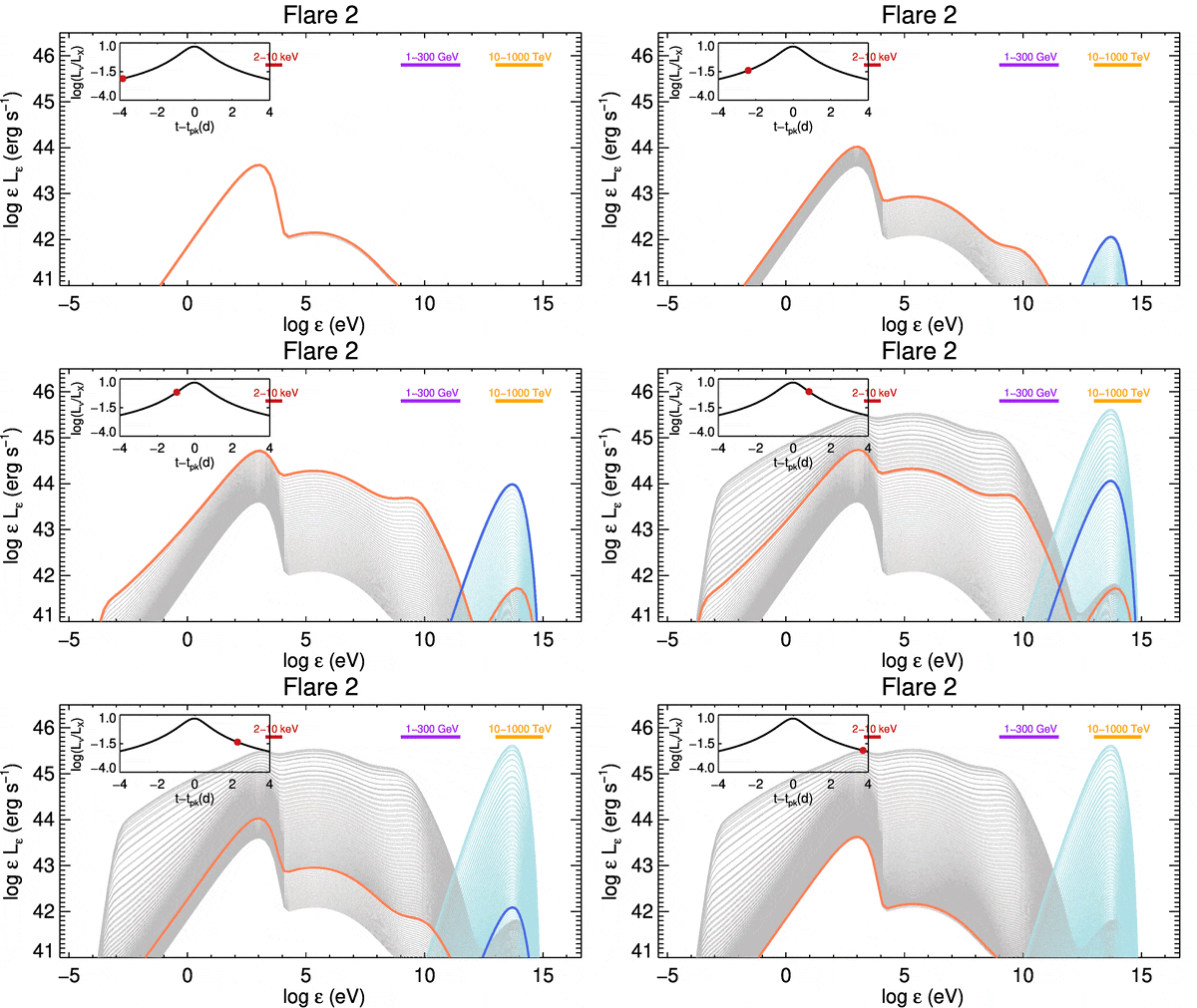
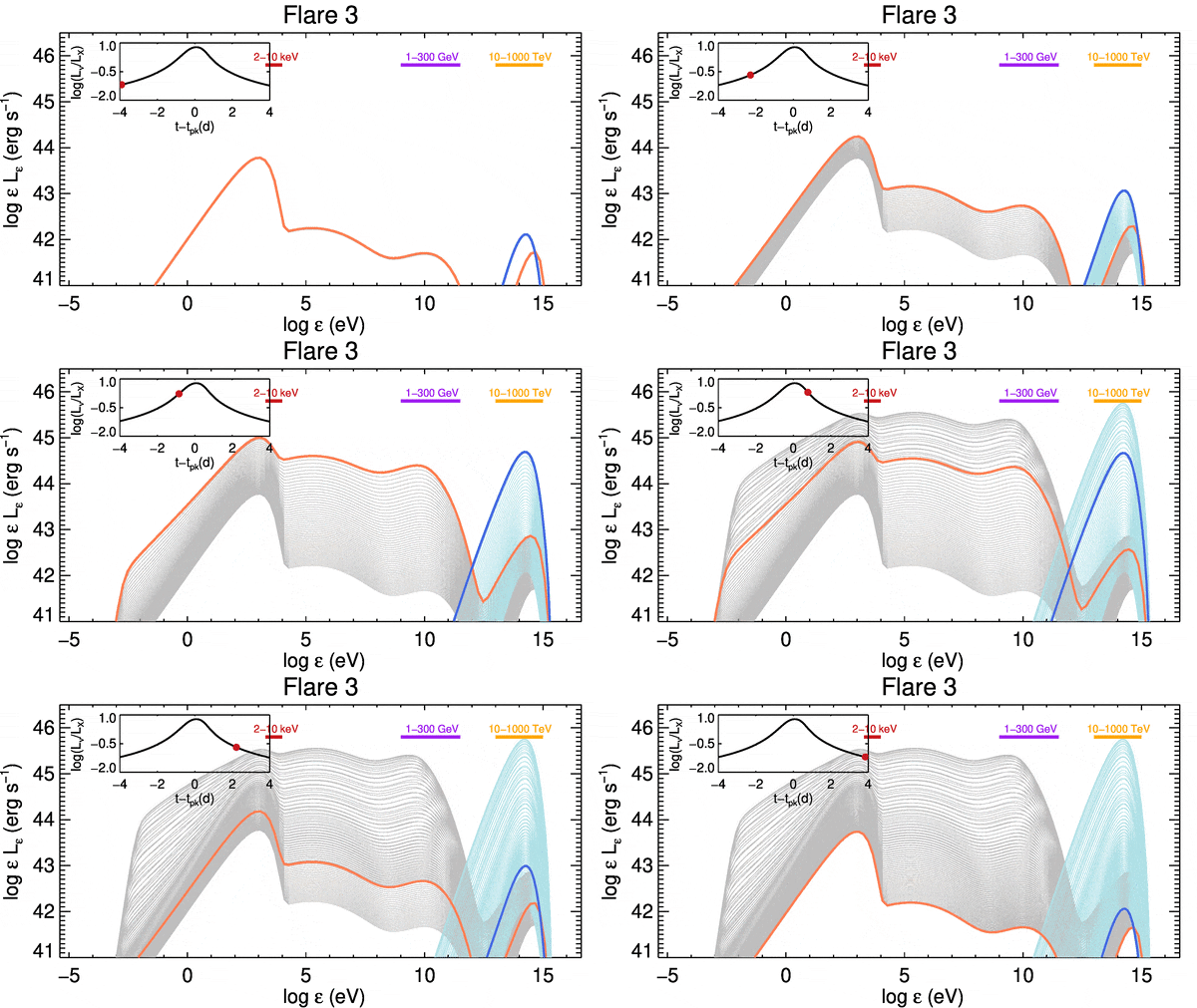
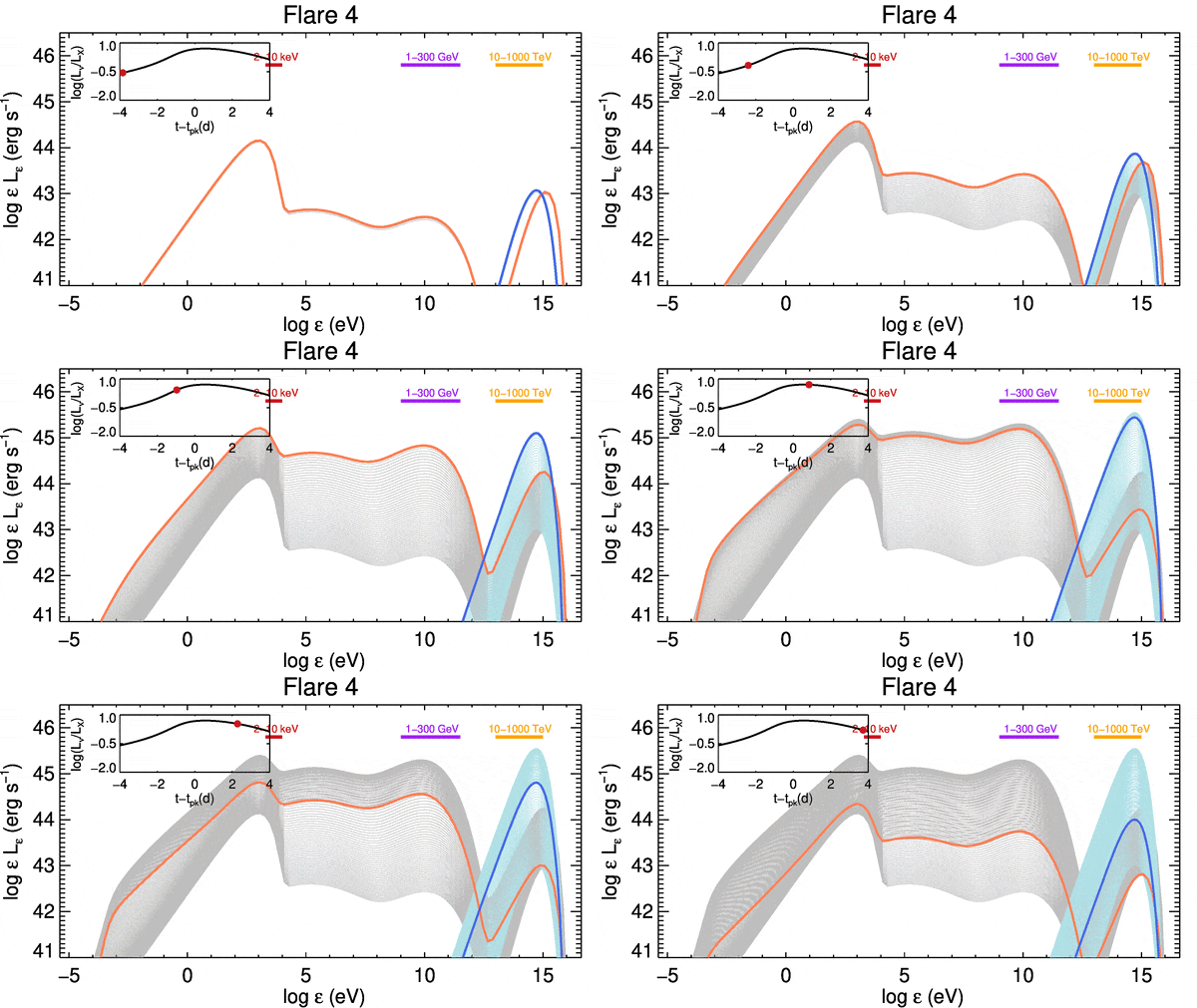
Figure 1: Animated figures showing the temporal evolution of the photon spectrum (grey lines) and the all-flavor neutrino spectrum (blue lines) for four indicative hadronic X-ray flares.
Our results can be found here: Mastichiadis & Petropoulou, 2021, ApJ, 2, 131
In a follow-up work we computed the predicted neutrino signal from X-ray flares detected in 66 blazars observed more than 50 times with the X-ray Telescope (XRT) on board the Neil Gehrels Swift Observatory. We adopted the model presented in our previous work. Using the 1 keV X-ray light curves for flare identification, the 0.5-10 keV fluence of each flare as a proxy for the all-flavour neutrino fluence, and the IceCube point-source effective area for different detector configurations, we calculated the number of muon and antimuon neutrinos above 100 TeV expected for IceCube from each flaring source. The bulk of the neutrino events from the sample originates from flares with durations ~1-10 d. Accounting for the X-ray flare duty cycle of the sources in the sample, which ranges between ~2 and 24 per cent, we computed an average yearly neutrino rate for each source. The median of the distribution (in logarithm) is ~0.03 yr-1, with Mkn 421 having the highest predicted rate 1.2 ± 0.3 yr-1, followed by 3C 273 (0.33 ± 0.03 yr-1) and PG 1553+113 (0.25 ± 0.02 yr-1). Our findings suggest that next-generation neutrino detectors together with regular X-ray monitoring of blazars could constrain the duty cycle of hadronic X-ray flares.
Our results can be found here: Stathopoulos S. I. et al., 2022, MNRAS, 510, 3
Bibliography
[1] C. M. Urry and P. Padovani, 1995, PASP, 107 [2] M. C. Begelman, R. D. Blandford, and M. J. Rees, 1984, Reviews of Modern Physics, 56.2 [3] M. Boettcher, 2019, Galaxies, 7 [4] M.G. Aartsen et al., 2013, Science, 342 [5] M.G. Aartsen et al., 2013, Phys.Rev.Lett., 111 [6] IceCube Collaboration, 2018a, Science, 361.6398 [7] IceCube Collaboration, 2018b, Science, 361.6398 [8] A. Franckowiak et al., 2020, ApJ, 893 [9] A. Reimer et al., 2019, ApJ, 881 [10] M. Petropoulou et al., 2020, ApJ 891 [11] A. Plavin et al., 2020, ApJ 894 [12] T. Hovatta et al., 2020, arXiv e-prints, arXiv:2009.10523
 Maria Petropoulou